

Sun or shade for your Hostas?

It may only be early in the year, but it always pays to be prepared. Whilst some of your Hostas are still coming out of their dormancy and don’t have many leaves, you may be forgiven for thinking, why is he discussing sun or shade for your Hostas.
The simple reason is ‘to be prepared’! Moving your Hostas about, at this time of year, is a great time to do it. If you leave moving your Hosta until it is in full leaf, and you need to move it to get a better position for more or even less sun, it won’t be as easy when fully foliaged and it will take much more looking after. That’s not to say you can’t move them when in leaf, it’s just easier to be prepared.
The months coming into spring, is an excellent time to rearrange your Hostas.
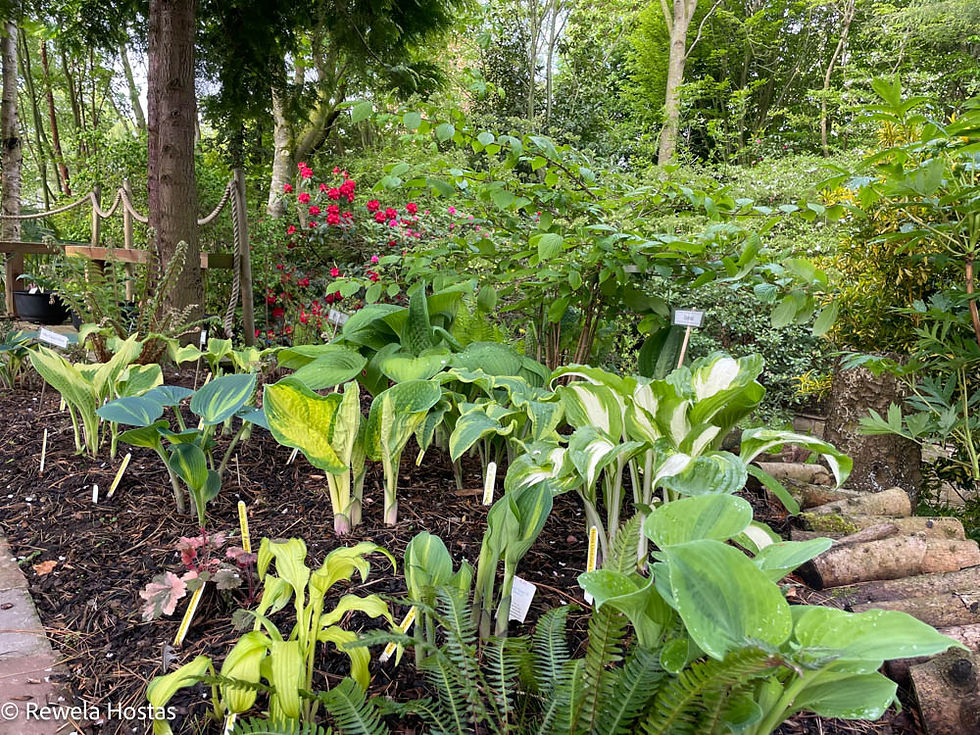
Hostas are often chosen for their wonderful foliage colour, size or shape, without a thought for what conditions it prefers. The amount of sunlight differs for a lot of Hostas. Some just don’t like the sun and need to be in a shady position to thrive, whilst others can tolerate more sun. Some even like a lot of sun.
As a guide, the blue leaved ones prefer to be in the shade, whilst yellow leaved ones generally prefer more sun, and won’t tolerate any shade. Of course there will be exceptions to that rule. All Hostas love moist soil and are dappled shade tolerant.
During the course of the last growing season, hopefully you will have made a note of the Hostas that didn’t do too well. Either too much sun or not enough of the right sun. These are the ones that you can move to see if a change will improve the health of your Hosta during the year. You can always keep moving until you get it right.
The conditions you have created for your Hostas beds may have been perfect when first planted. However change can happen very quickly.
The canopy above the Hostas, that provided the right sort of shade, will have grown. There will be more shade in the canopy than before, and steps need to be taken to put it back to a suitable place for your Hostas again.

This may have to be drastic, such as the complete removal of a tree or two. This is a regular task in our garden. By removing the tree or tree branches, you are allowing much more light onto the Hosta bed. Don’t go mad though, they still need some shade. This is definitely a job for now. If you do nothing, it will just get worse for your Hostas and they may even die.
A note of concern, I hear? 'Cutting down trees'? When the garden was established 20 years ago, we used locally grown whips. As the trees have developed over the years we have gradually thinned them out, reducing over crowding thus benefiting the trees but also providing ideal conditions for some of our Hostas, and will continue to do so.

Another, closely related task is to crown lift some of your trees. Conifers in particular respond well to this, as well as some of the smaller deciduous trees such as Birch trees. By crown lifting the sun from above still can’t penetrate any more than it did before, but the longer rays of the lower, less hurtful sun is allowed onto your Hosta bed. This is usually the morning and afternoon sun which is not as strong as the midday sun.

You may wish to create another Hosta bed, but where you want it is permanently shady. This commonly occurs on the north side of trees or large shrubs. Removing some trees or shrubs or crown lifting trees could be the solution to your problem.
Having Hostas growing in an area that has too much sunshine is well documented with many pictures of scorched or washed-out foliage. However, growing them with not enough light is just as bad.
If they don’t get enough light, they can be drawn to any light around and become weak & elongated. They grow slowly, if at all, and don’t produce any offshoots for division purposes. They will usually decline rather than develop. Give your Hosta the best possible chance. You can’t really go wrong with dappled shade.
Dappled or partial shade is where the border gets some sunlight, as well as shade, but balanced. Not too much of either.
When Hostas are growing in partial shade, protected from the harmful midday sun, and they have enough moisture, they will usually be healthy. They will grow well, reproduce well, and be less susceptible to attacks for slugs. A healthy Hosta is a sight for sore eyes.
Growing plants in full midday sun is fine for some perennials, but not a place for Hostas. We do not recommend growing Hostas in full sun. There are a few that will tolerate more sun than others, but not full sun.
A Hosta grown in less than favourable conditions is more likely to succumb to pests, and not pretty to look at. You didn’t grow them to look like this.
Hostas have a relationship with moisture. Any Hosta without adequate moisture will suffer, even in dappled shade. Ensure the soil is moisture retentive. The more moisture in the soil, the more there is in the Hosta. If dehydrated, the sun will dry out the leaves quicker than the Hosta can get it from the soil and scorch the leaves. The Hosta will be less healthy and even look faded. Having a slightly cooler area is a benefit, such as a higher elevation. However, being in a naturally warm climate in the UK, some Hostas may even struggle, even in some shade.
What else can we do to ensure your Hostas are at their very best ?

We have discussed moving plants in the ground to a better position or creating the right conditions where they are by changing the plants around them. What about growing your Hostas in pots and containers.
We all want beautiful Hostas, and when they suddenly don’t look their best, you can always move the pot to a better spot, or even to recover. When grown in pots, you can react very quickly. You can experiment with which Hosta like it where. Use the sellers description of sun tolerance as a guide, but you can make up your own mind. However, make sure that when grown in a pot that there is an adequate watering and feeding program, especially in the warm months.
Too much light as well as not enough can change the look of the Hosta. It not only alters their shape but also their colour. Keep moving them until you get it just right.
By getting the perfect light requirements, your Hostas will be strongly coloured and healthy. Afterall that is why we grow them.

You can, of course, make your own shade. A temporary garden umbrella will do quite a good job in keeping the worst of the sun off your Hostas.

Go one step further and put up a sail to cover a larger display. This is taken down during the winter or windy periods. The size can be adjusted to suit the scale of your garden.
A note about tree & branch removal. Of course you can't just take down trees, willy nilly! It is always best to check to make sure you don't need permission to fell a tree. You may also need to get a professional tree surgeon in to do the job. Here is a link to find out!
If you want to overdose on Hosta Knowledge & discover all our past Hosta blogs click here
Shop for Hostas HERE

John Plant
Rewela Hostas


hi88 khiến mình chú ý hơn đến cách một phiên sử dụng được nối tiếp qua nhiều khu vực khác nhau. Mình thường bắt đầu từ nội dung quen thuộc rồi lựa chọn hướng tiếp theo theo nhu cầu lúc đó. Có lúc mình sử dụng Casino, chuyển sang Xổ số rồi tiếp tục với Bắn cá để thay đổi nhịp trải nghiệm. Mỗi danh mục có đặc điểm riêng nhưng các mốc trên giao diện vẫn giúp mình xác định được phạm vi đang sử dụng. Khi muốn quay lại phần trước, mình thường dựa vào vị trí menu đã ghi nhớ. Qua những lần di chuyển liên tục, mình thấy việc phân chia các khu vực giúp mình duy…
qq88 gợi cho mình sự quan tâm đến cách những chức năng cá nhân được bố trí trong một hệ thống có nhiều nội dung. Mình thường bắt đầu bằng việc quan sát thanh điều hướng và vị trí các mục phục vụ tài khoản. Khi tìm hiểu Nổ hũ, mình chú ý đến phần giới thiệu các cấp độ thưởng rồi chuyển sang Bắn cá để xem bối cảnh đại dương 3D. Sau đó, mình dành thời gian quan sát khu vực đăng ký và đăng nhập, đặc biệt là cách những lựa chọn được đặt tên. Điều mình muốn đánh giá là khả năng phân biệt chức năng tài khoản với danh mục trò chơi. Mình cũng thử quay…
qq88 làm mình chú ý đến cách các lựa chọn được phân tầng khi đi sâu vào từng khu vực. Mình thường xem danh mục chung trước rồi mới chọn phần cụ thể để hiểu rõ hơn mối liên hệ giữa chúng. Với Đá gà, mình có thể tìm sảnh SV388 và quan sát các cửa Meron, Wala trong ngữ cảnh trận đấu. Khi chuyển sang Xổ số, cách hiển thị lại tập trung vào những thông tin liên quan đến kỳ quay. Phần hỗ trợ khách hàng có khu vực riêng nên mình biết nơi cần tìm khi muốn giải đáp thắc mắc. Với mình, cách tổ chức này giúp những loại dữ liệu khác nhau vẫn có trật tự,…
Khi đánh giá sự phong phú của RR88 , mình không muốn chỉ đếm số lượng chuyên mục mà quan sát cách chúng tạo thành một hệ sinh thái. Thể thao có bóng đá, bóng rổ, tennis và e-sports; casino có baccarat, blackjack, Xóc đĩa; bắn cá có nhiệm vụ và vũ khí; xổ số có Mega 6/45 và Siêu tốc. Các dữ liệu này giúp nền tảng có nhiều hướng trải nghiệm, nhưng cảm nhận chính là sự phân tầng khá dễ hiểu. Sau đó mình xem thêm về các nhà cung cấp như Evolution Gaming và Pragmatic Play. Cá nhân mình thấy trải nghiệm sẽ dễ chịu hơn khi người dùng có thể đổi hướng mà không bị rối.
khi mình tiếp tục tìm hiểu sâu hơn về cách các nền tảng trực tuyến xây dựng hệ thống, SHBET tạo cho mình cảm giác khá cân bằng giữa nội dung và khả năng điều hướng. các khu vực hiển thị được phân chia rõ ràng giúp việc theo dõi không gặp nhiều khó khăn. trong quá trình trải nghiệm, mình thấy game bài được bố trí theo từng nhóm riêng giúp người dùng dễ quan sát hơn. bên cạnh đó, giao diện vẫn giữ được sự ổn định trên nhiều thiết bị khác nhau. điều này giúp quá trình sử dụng trở nên thuận tiện và dễ tiếp cận hơn